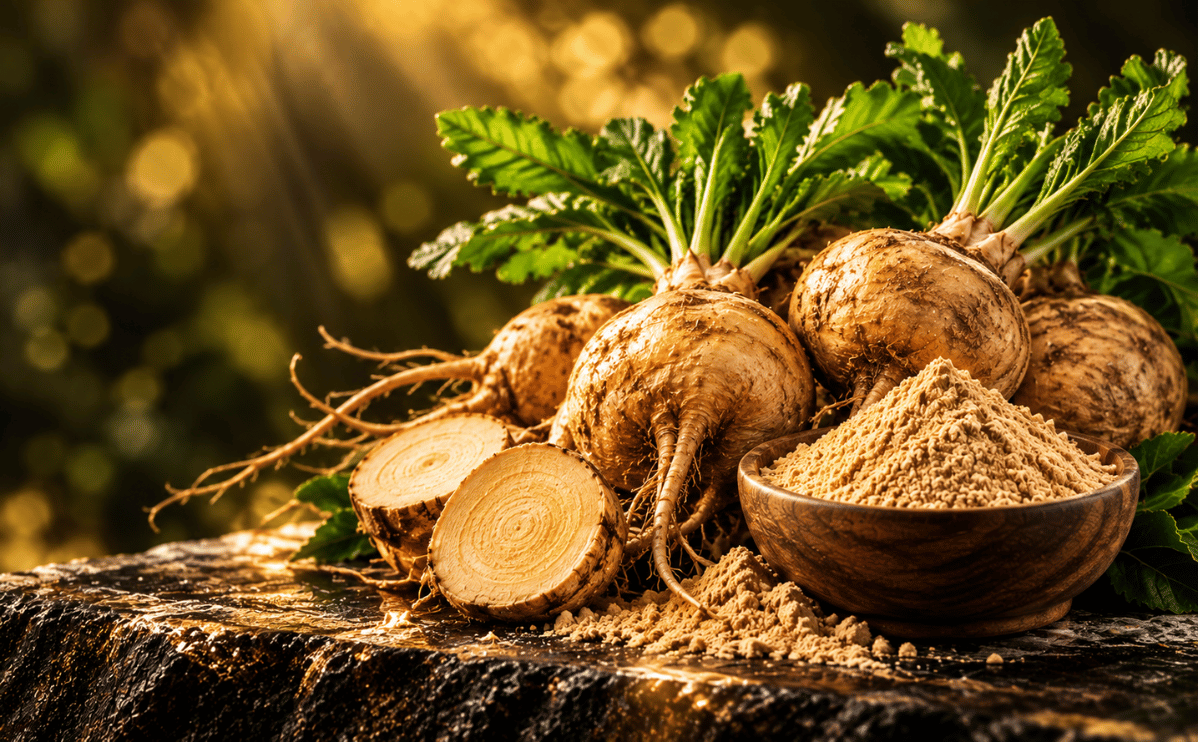
Maca root, scientifically known as Lepidium meyenii, is a plant native to the high Andes of Peru, where it has been traditionally consumed for centuries as both a food and a natural source of vitality. Today, maca is widely used in supplements designed to support energy, stamina, sexual wellness, and overall well-being.
One of maca’s most popular uses is supporting natural energy and physical performance. Unlike caffeine and other stimulants, maca does not provide energy through a direct stimulant effect. Instead, it is commonly incorporated into daily wellness routines by people looking to maintain endurance, activity, and resilience during demanding days.
Maca is also strongly associated with libido and sexual wellness. Several studies have investigated its potential to support sexual desire in both men and women. For this reason, maca has become a popular botanical ingredient in products formulated for vitality, confidence, and intimate wellness.
For men, maca is often promoted for reproductive health. Research has explored its potential effects on sperm concentration, quality, and motility, although more high-quality studies are needed before firm conclusions can be made. Importantly, maca should not be described as a direct testosterone booster, as current evidence does not consistently show meaningful increases in testosterone levels.
Maca also provides naturally occurring carbohydrates, amino acids, minerals, and plant compounds, making the root nutritionally interesting in addition to its traditional uses.
Another advantage is its versatility. Maca can be consumed as a powder, extract, capsule, or as part of functional foods and herbal formulations.
With its long history of traditional use and growing international popularity, maca root represents a compelling natural ingredient for people seeking energy, stamina, libido, and everyday vitality. Its distinctive heritage in the Peruvian Andes has helped make maca one of the most recognizable wellness botanicals in the world.